


Wellington County
Improving public works response times, vehicle uptime, and fleet visibility with telematics
Wellington County, Ontario, operates a 60-vehicle public works fleet serving approximately 90,000 residents across a 1,000-square-mile area. With 28 vehicles dedicated to snowplowing and spreading, the County needs reliable visibility into its fleet during winter operations and throughout the year. By bringing vehicle tracking, maintenance information, driver safety reporting, and electronic inspections into one system, Wellington County gained greater control over daily operations while improving how it responds to service needs and maintains its vehicles.

The Challenge: Replacing Limited Fleet Visibility
Wellington County’s previous GPS system provided basic track-and-trace functionality but lacked real-time monitoring and broader operational insight. Fleet information was also spread across separate systems, making it more difficult to manage the operation as a whole.
For a public works fleet responsible for snowplowing and other services, knowing where vehicles are and what they are doing is particularly important. When residents reported that a snowplow had not yet reached a street, fleet staff previously had to contact the driver to determine the vehicle’s location and expected return time.
The County was also looking for better visibility into vehicle health. Without early access to fault information, maintenance issues could become more disruptive and service work was harder to coordinate around actual vehicle needs.
The Solution: A Unified View of Fleet Operations
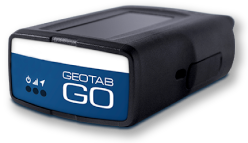
Wellington County equipped all 60 vehicles with telematics and established a centralised approach to monitoring fleet activity.
Real-time location information gave fleet staff a direct view of vehicle movements, making it easier to monitor snowplow activity and respond to resident inquiries. Managers could verify where a plow had travelled and determine when it was expected to return to a particular area rather than relying on phone calls and driver updates.
The County also began relying on safety reports covering speeding, seatbelt use, harsh turning, and harsh braking. When a concerning trend appeared, fleet management could follow up with the driver and address the behaviour directly. Forward-facing cameras provided additional information when incidents required investigation.
Vehicle health monitoring added a proactive maintenance component. Fleet staff could see fault codes before vehicles arrived at the garage and schedule service work in advance. Service reminders also helped the maintenance team better stage upcoming work.
Electronic pre-trip inspections and driver logging further reduced reliance on paper-based processes and helped the fleet prepare for electronic logging requirements. Drivers adopted the inspection process as part of their regular workflow.
The Results: Better Service and More Proactive Maintenance
Real-time tracking changed how Wellington County handled questions about its public works operations. Instead of calling a driver to determine a plow’s location, fleet staff could check its position directly and provide residents with more accurate information. The same visibility could be used to verify reports about speeding or missed areas of service and follow up with the driver when necessary.
Vehicle health monitoring also improved maintenance planning. Fleet staff could identify fault codes before a driver arrived at the garage, allowing mechanics to prepare in advance and reducing time spent diagnosing issues after the vehicle came in. Service reminders provided another way to coordinate maintenance work and support vehicle uptime.
The County also gained better insight into how its vehicles were being used. Monitoring kilometres driven gave fleet managers information that could support future vehicle procurement decisions and help determine how existing assets were being utilised.
For Wellington County, GPS tracking and telematics provided a more complete view of public works operations. Real-time fleet visibility helped staff respond to community service needs, while vehicle health and utilization information supported more proactive maintenance and long-term fleet planning.
Want to see more fleet success stories? Explore our Success Stories to see how GPS tracking and telematics are helping organizations improve safety, efficiency, maintenance, and fleet performance.

Check Pricing
All of our GPS tracking solutions are customized for your business and tailored to your budget...

Return on Investment
At GPS Tracking Canada, we understand that every company benefits from GPS Tracking in different ways...

Request a Demo
Get a live one-on-one demonstration from GPS Tracking Canada. See for yourself how customized...
For more information, or to schedule a demo or an installation,
call us toll free at 1.877.477.0987