

Frequently Asked Questions
What is a nuclear verdict in fleet operations?
A nuclear verdict is an unusually large legal judgment, often involving millions of dollars in damages after a serious collision or liability claim. For fleets, these verdicts can create major financial, insurance, and reputational risks.
Why are nuclear verdicts a concern for companies operating on Highway 401?
Highway 401 is one of Canada’s busiest transportation corridors, with heavy traffic, commercial vehicles, construction zones, and frequent congestion. More traffic means more exposure to collisions, disputes, and costly claims.
How can AI dash cams help prevent nuclear verdicts?
AI dash cams provide video evidence, driver behaviour alerts, and incident context. This helps fleets prove what happened, defend drivers from false claims, and show that the company actively manages safety.
What makes AI dash cams different from regular dash cams?
Regular dash cams mainly record footage. AI dash cams can detect risky behaviours such as distracted driving, tailgating, harsh braking, and potential collision events, making them more useful for prevention and coaching.
How do AI dash cams protect drivers from false claims?
Video footage can show whether another vehicle cut off the driver, stopped suddenly, changed lanes unsafely, or caused the collision. This helps protect professional drivers when they are not at fault.
Can AI dash cams help reduce insurance claims?
Yes. AI dash cams can provide clear evidence during claims investigations, reduce uncertainty, and help prevent exaggerated or fraudulent claims. They also support better driver coaching, which may reduce future incidents.
Do AI dash cams record all the time?
Many AI dash cam systems can record continuously or capture event-based footage when risky behaviour, harsh braking, collisions, or other triggers occur. The exact setup depends on the camera and fleet requirements.
What driver behaviours can AI dash cams detect?
AI dash cams may detect behaviours such as distracted driving, phone use, tailgating, harsh braking, rapid acceleration, unsafe lane behaviour, and signs of driver fatigue, depending on the system used.
How do AI dash cams support driver coaching?
Managers can use real video events to coach drivers on specific behaviours. Instead of giving general feedback, they can review actual incidents and explain how to avoid similar risks in the future.
Are AI dash cams useful for construction and job site fleets?
Yes. Job site fleets often operate around heavy equipment, workers, pedestrians, trailers, and tight access points. AI dash cams help improve visibility, accountability, and safety both on the road and near the job site.
Why are AI dash cams important for fleets that tow trailers or move equipment?
Vehicles towing trailers or transporting equipment have longer stopping distances, larger blind spots, and higher liability exposure. Dash cam footage can help document incidents and support safer driving practices.
Can AI dash cams help with accident investigations?
Yes. AI dash cams provide visual evidence of what happened before, during, and after an incident. When combined with GPS tracking data, they give fleets a clearer picture of speed, location, route, and driver actions.
How does Geotab integration improve AI dash cam performance?
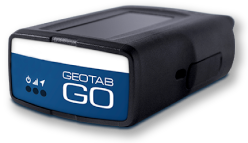
Geotab integration connects video footage with telematics data such as GPS location, speed, braking, driver behaviour, and vehicle activity. This gives managers more complete incident context in one platform.
Can AI dash cams help identify risky routes or locations?
Yes. When dash cam events are connected with GPS data, fleets can identify areas where hard braking, close calls, or unsafe driving events happen repeatedly, such as highway ramps, job site entrances, or congested routes.
Do AI dash cams only help after a collision?
No. AI dash cams are also preventive tools. They can alert drivers in real time, help managers coach risky behaviours, and reduce the chance of future collisions.
Are AI dash cams intrusive for drivers?
When implemented properly, AI dash cams are safety tools, not surveillance tools. Clear policies, transparent communication, and coaching-focused use can help drivers understand that the goal is protection and safety.
Can dash cam footage be used to prove a driver was not at fault?
Yes. Dash cam footage can show road conditions, surrounding traffic, sudden actions by other drivers, and the fleet driver’s response. This can be valuable when liability is disputed.
Why should fleets use AI dash cams instead of relying only on GPS tracking?
GPS tracking shows where a vehicle was and how it was driven. AI dash cams add visual proof, helping explain why an event happened and who may have caused it.
What types of fleets benefit most from AI dash cams?
Construction, delivery, service, utility, transportation, waste management, public works, and equipment-hauling fleets can all benefit from AI dash cams, especially if they operate in high-traffic or high-liability environments.
Why choose GPS Tracking Canada for AI dash cam and Geotab solutions?
GPS Tracking Canada helps businesses implement Geotab-integrated GPS tracking and AI dash cam solutions that improve driver safety, support claims protection, and give managers better visibility into fleet risk.