

Heavy-Duty vs. Non-Heavy-Duty 16-Pin Harnesses
Choosing the right 16-pin harness may seem like a small installation detail, but it can affect device fit, power compatibility, diagnostic access, and long-term reliability. For fleets using Geotab GO devices, the difference between a heavy-duty 16-pin harness and a non-heavy-duty 16-pin harness is not just the connector shape. It is mainly about the vehicle type, electrical system, mounting requirements, and diagnostic environment.
A 16-pin port is commonly associated with OBD-II diagnostics. Geotab explains that the OBDII port allows telematics devices to access information such as vehicle speed, engine data, idling, fault codes, fuel usage, and other vehicle performance data. However, not every vehicle with a 16-pin-looking port should use the same harness. Heavy-duty trucks and buses can have different voltage systems, diagnostic networks, and mounting needs compared with cars, vans, and pickup trucks.
What Is a 16-Pin Harness?
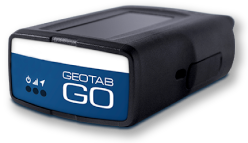
A 16-pin harness is an adapter cable used to connect a Geotab GO device to a vehicle’s diagnostic port. Instead of plugging the device directly into the vehicle port, the harness creates a secure connection and can help move the device away from the driver’s footwell, dashboard recess, or service access area.
Geotab notes in its harness overview that different vehicles can have different connector types, port locations, and installation requirements. This is why fleets often need a harness rather than a direct plug-in connection.
In many installations, a T-harness is preferred because it allows the GO device to stay connected while keeping the vehicle’s diagnostic port accessible for mechanics, service technicians, or inspection tools.
What Is a Non-Heavy-Duty 16-Pin Harness?
A non-heavy-duty 16-pin harness is generally intended for light-duty and some medium-duty vehicles, such as cars, vans, SUVs, and pickup trucks. For Geotab GO10 and GO10 Plus devices, the HRN-XGS16K2-LD light-duty 16-pin harness is designed for light-duty vehicles internationally.
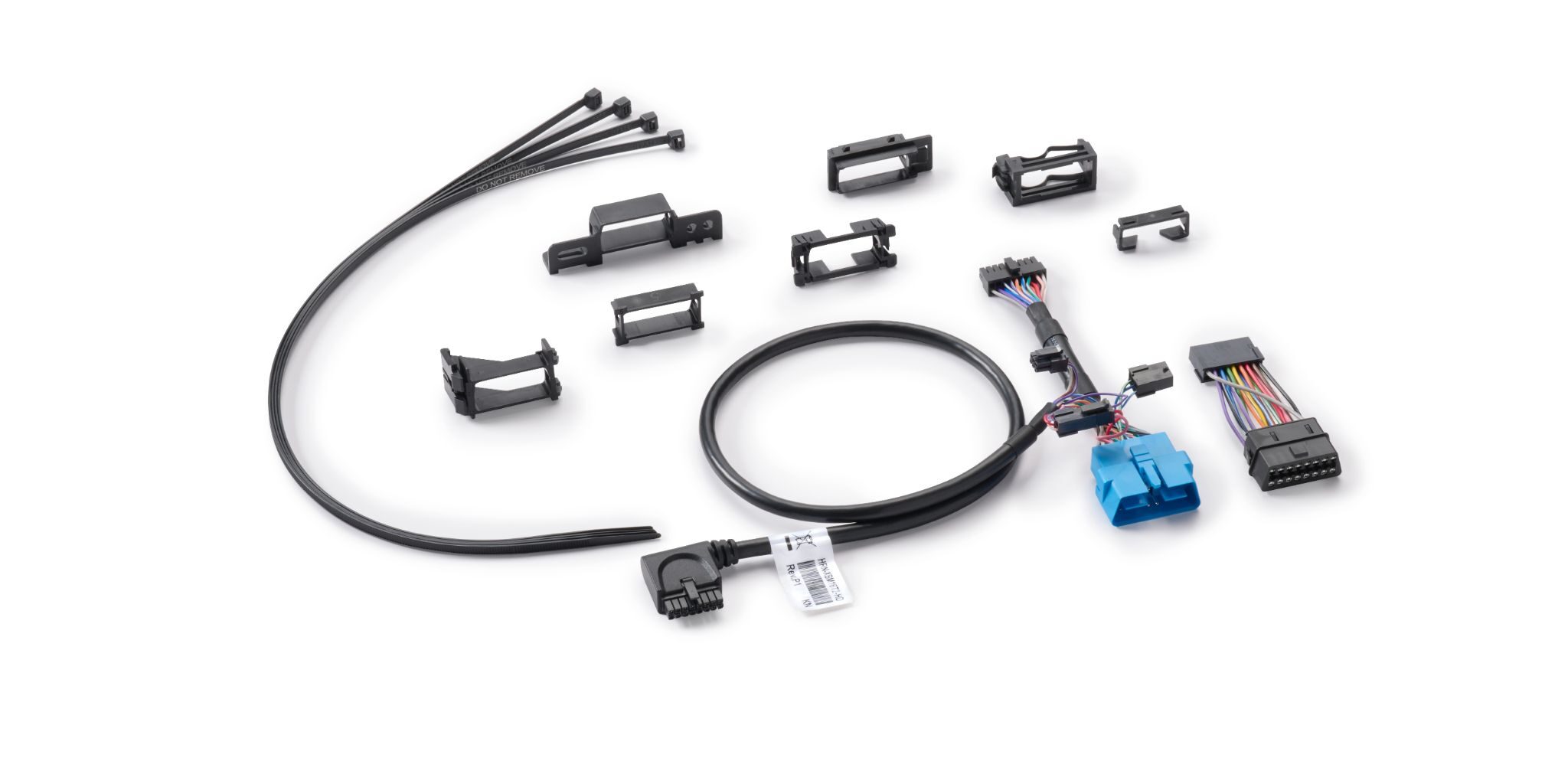
According to Geotab’s support documentation, this light-duty harness includes 11 mounting brackets and uses a 12V-compatible red connector. Its power output range is listed as 8V to 12V, which matches typical light-duty vehicle electrical systems.
This type of harness is best suited for fleets with vehicles such as service vans, company cars, pickup trucks, small delivery vehicles, and other vehicles that use a standard light-duty OBD-II environment.
What Is a Heavy-Duty 16-Pin Harness?
A heavy-duty 16-pin harness is designed for heavy-duty vehicles that still use a 16-pin OBD-II-style diagnostic connection. For Geotab GO10 and GO10 Plus devices, the HRN-XGS16K2-HD heavy-duty 16-pin harness is made for heavy-duty vehicles such as trucks and buses.
The heavy-duty version includes 6 mounting brackets and uses a 24V-compatible blue connector. Geotab lists its power output range as 8V to 36V, making it suitable for a broader heavy-duty electrical environment than the light-duty version.
This distinction matters because many heavy-duty vehicles operate differently from light-duty vehicles. A port may look similar from the outside, but the power requirements and vehicle network behind it can be different.
The Main Difference: Vehicle Class and Voltage
The most important difference between heavy-duty and non-heavy-duty 16-pin harnesses is the vehicle application. Geotab’s Harness Assessment Cheat Sheet explains that light-duty vehicles typically use a 12V electrical system, while heavy-duty vehicles such as commercial semi-trucks and industrial machinery often use a 24V electrical system.
That difference affects harness selection. A light-duty 16-pin harness is not meant for heavy-duty trucks and buses. Geotab’s Harness Identification and Application guide specifically states that the light-duty version is for cars, vans, and pickup trucks, while the heavy-duty version is for trucks and buses.
Using the wrong harness can create installation problems and may increase the risk of poor performance or equipment damage. For this reason, fleets should not choose a harness based only on the number of pins.
Adapter Brackets and Physical Fit
Another key difference is the number and type of mounting adapters included in the kit. The light-duty GO10 16-pin harness includes 11 mounting brackets for common light-duty vehicle layouts. These include mounting styles for North American, European, Asian, VW, BMW, Ford, and Volvo-style applications.
The heavy-duty GO10 16-pin harness includes 6 mounting brackets focused on heavy-duty applications. These include North American flange mounts, European lock mounts, Asian snap-in, MAN/DAF slide lock, and a heavy-duty Volvo slide mount.
This is important because the diagnostic port’s physical mounting style can vary by manufacturer and model. The correct adapter helps the installer secure the replacement port properly and maintain a clean, professional installation.
Why Some Heavy-Duty Vehicles Still Use 16-Pin Ports
Many fleet managers associate heavy-duty vehicles with 6-pin or 9-pin Deutsch connectors. That is often true, especially in North American commercial trucks. Transport Canada notes that the common diagnostic port on late-model medium- and heavy-duty vehicles is the SAE J1939-13 9-pin Deutsch diagnostic port, but it also notes that some Mack and Volvo heavy-duty vehicles from around 2014 onward may be equipped with a light-duty-style OBD-II diagnostic port.
That is where confusion can happen. A heavy-duty truck may have a 16-pin port, but that does not automatically make it a light-duty installation. The vehicle may still require a heavy-duty 16-pin harness because of its voltage system, data network, or manufacturer-specific design.
Standard 16-Pin Harnesses vs. Heavy-Duty 16-Pin Harnesses
Geotab also offers standard or universal 16-pin harness options for certain GO device installations. For example, the HRN-GS16K22-A standard 16-pin T-harness is intended for most light-duty and medium-duty vehicles and some heavy-duty vehicles internationally. However, Geotab’s documentation also notes that it is not intended for generic heavy-duty vehicle applications.
This is why it is important to check the vehicle type, device model, harness part number, and Geotab’s current compatibility guidance before ordering. In some cases, a universal 16-pin harness may fit physically, but a dedicated heavy-duty harness may be the more appropriate option.
Why the Right Harness Matters for Fleet Operations
The right harness helps support a stable connection between the vehicle and the GO device. This connection is important because fleet managers rely on telematics data for GPS tracking, trip history, driver behaviour, idling, engine diagnostics, maintenance planning, and compliance-related reporting.
A correct harness can also make the installation cleaner and safer. It can move the device away from the driver’s knees or pedals, reduce the chance of accidental unplugging, and keep the diagnostic port accessible for maintenance. For fleets with mixed vehicles, this is especially important because one company may operate light-duty vans, pickup trucks, medium-duty service vehicles, and heavy-duty trucks at the same time.
How to Choose the Right 16-Pin Harness
The best way to choose between a heavy-duty and non-heavy-duty 16-pin harness is to start with the vehicle, not the connector. Fleet managers should confirm whether the vehicle is light-duty, medium-duty, or heavy-duty; whether it uses a 12V or 24V electrical system; what diagnostic connector is installed; and which Geotab GO device is being used.
For GO10 and GO10 Plus installations, Geotab separates the light-duty 16-pin harness and heavy-duty 16-pin harness into different part numbers. The light-duty version is intended for cars, vans, and pickup trucks. The heavy-duty version is intended for trucks and buses. If there is uncertainty, the vehicle’s make, model, year, diagnostic port type, and installation environment should be reviewed before ordering.
Final Thoughts
The difference between a heavy-duty and non-heavy-duty 16-pin harness comes down to more than the plug shape. A non-heavy-duty 16-pin harness is generally designed for 12V light-duty vehicles, while a heavy-duty 16-pin harness is designed for trucks and buses that may require broader voltage compatibility and heavy-duty mounting support.
For fleets, using the correct harness helps protect the installation, supports reliable telematics data, and keeps vehicles easier to service. If your fleet includes a mix of vans, pickups, buses, straight trucks, or heavy-duty vehicles with 16-pin ports, harness selection should be handled carefully.
GPS Tracking Canada provides Geotab-integrated GPS tracking solutions and can help your business choose the right GO device, harness, and installation approach for your fleet. If you are unsure whether your vehicle needs a heavy-duty or non-heavy-duty 16-pin harness, contact us today for guidance, product support, or a fleet tracking consultation.
Frequently Asked Questions
What is a 16-pin harness?
A 16-pin harness is an adapter cable that connects a Geotab GO device to a vehicle’s diagnostic port, helping provide a secure connection for GPS tracking and vehicle data collection.
What is the difference between a heavy-duty and non-heavy-duty 16-pin harness?
The main difference is the vehicle application. Non-heavy-duty 16-pin harnesses are generally used for light-duty vehicles, while heavy-duty 16-pin harnesses are designed for trucks, buses, and other heavy-duty vehicles.
What vehicles use a non-heavy-duty 16-pin harness?
Non-heavy-duty 16-pin harnesses are commonly used in cars, vans, SUVs, pickup trucks, and other light-duty fleet vehicles.
What vehicles use a heavy-duty 16-pin harness?
Heavy-duty 16-pin harnesses are typically used in commercial trucks, buses, and other heavy-duty vehicles that have a 16-pin diagnostic port.
Why does harness type matter for GPS tracking?
The right harness helps ensure proper power compatibility, stable device connection, accurate data collection, and a cleaner installation.
Can a heavy-duty vehicle have a 16-pin port?
Yes. Some heavy-duty vehicles, including certain trucks and buses, may use a 16-pin diagnostic port instead of a 6-pin or 9-pin connector.
Does every 16-pin port use the same harness?
No. A vehicle may have a 16-pin port, but the correct harness depends on the vehicle type, voltage system, connector design, and Geotab device being installed.
What is a light-duty 16-pin harness used for?
A light-duty 16-pin harness is used to connect a Geotab GO device to light-duty vehicles such as cars, vans, and pickup trucks.
What is a heavy-duty 16-pin harness used for?
A heavy-duty 16-pin harness is used to connect a Geotab GO device to heavy-duty vehicles such as trucks and buses with compatible 16-pin diagnostic ports.
What is the voltage difference between light-duty and heavy-duty harnesses?
Light-duty vehicles often use 12V systems, while heavy-duty vehicles may use higher voltage systems, such as 24V. This is one reason harness selection is important.
Can I use a light-duty 16-pin harness on a heavy-duty truck?
It is not recommended unless confirmed compatible. Heavy-duty trucks may require a harness designed for higher voltage ranges and heavy-duty diagnostic environments.
Can I use a heavy-duty 16-pin harness on a light-duty vehicle?
You should only use a harness that matches the vehicle and device requirements. A heavy-duty harness is designed for trucks and buses, not standard light-duty applications.
Why do Geotab harnesses include mounting brackets?
Mounting brackets help secure the replacement diagnostic port properly, making the installation cleaner, safer, and easier to service.
What is a T-harness?
A T-harness connects a telematics device while keeping the original diagnostic port accessible for service tools, inspections, and maintenance work.
Why should fleets avoid direct plug-in installations in some vehicles?
Direct plug-in installations can place the device in an exposed location where it may be bumped, unplugged, or interfere with driver space. A harness can provide a more secure installation.
How do I know which 16-pin harness my vehicle needs?
You should check the vehicle make, model, year, duty class, diagnostic port type, voltage system, and Geotab device model before choosing a harness.
Are 16-pin harnesses only for OBD-II vehicles?
Most 16-pin harnesses are associated with OBD-II-style diagnostic ports, but some heavy-duty vehicles may also use a 16-pin-style connector.
Why is harness compatibility important for mixed fleets?
Mixed fleets may include cars, vans, pickups, buses, and heavy-duty trucks. Each vehicle type may require a different harness for proper installation and data access.
Can GPS Tracking Canada help choose the right Geotab harness?
Yes. GPS Tracking Canada can help identify the right Geotab device, harness, and installation approach based on your fleet’s vehicles and tracking needs.
Who should I contact if I am unsure which harness to use?
If you are unsure whether your vehicle needs a heavy-duty or non-heavy-duty 16-pin harness, contact GPS Tracking Canada for support and guidance.