

There are dozens of GPS fleet tracking providers in Canada, and they all claim to be the best. If you are looking at options for the first time, it can be overwhelming. This guide cuts through the noise and helps you focus on the factors that actually matter for your business.
Why This Decision Matters
A GPS tracking system is not a one-time purchase. It is an ongoing relationship with a provider. You are committing to their hardware, their platform, and their support team. Switching providers later means replacing devices, retraining staff, and losing historical data. It is worth getting it right the first time.
The wrong system wastes money and creates frustration. The right one becomes a tool your team relies on every day.
Key Factors to Consider
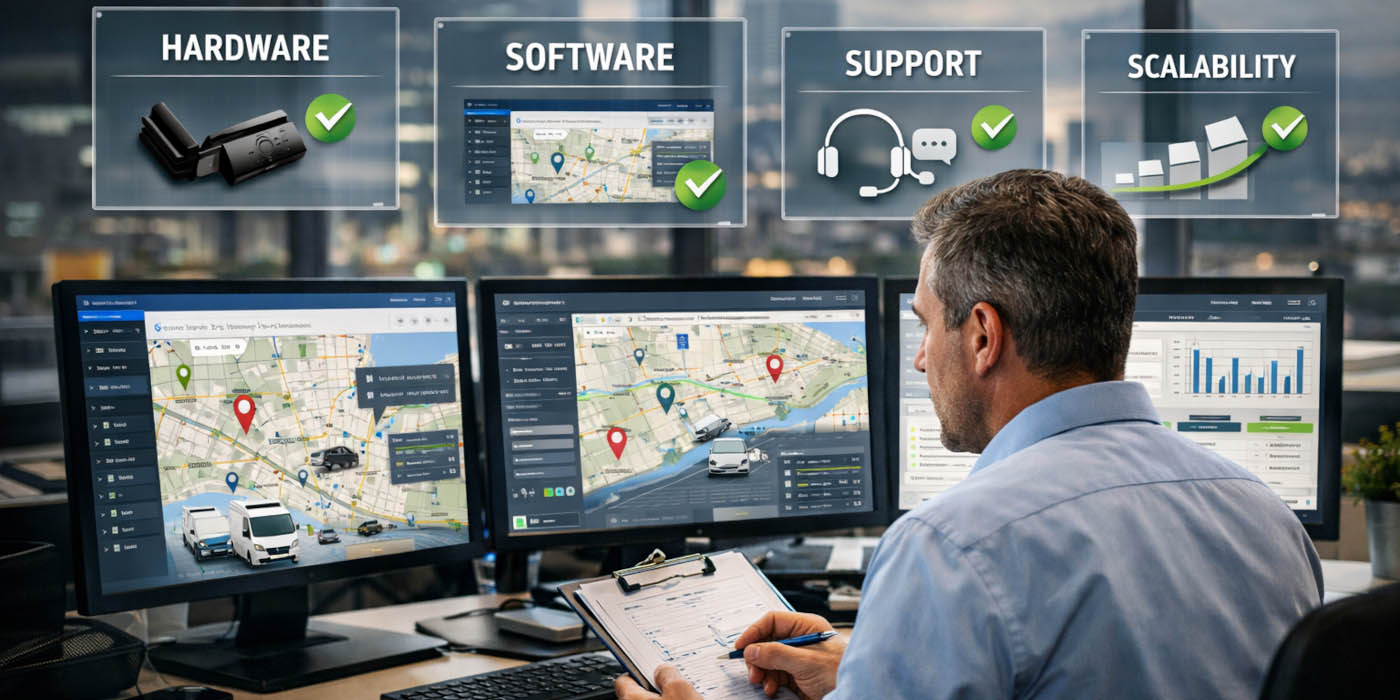
Hardware Quality and Options
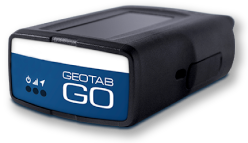
Not all tracking devices are the same. Some are basic plug-and-play units that work fine for cars and light trucks. Others are ruggedized for construction equipment, extreme temperatures, or off-road use. Battery-powered trackers exist for trailers and unpowered assets.
Think about what you are tracking. If it is a fleet of delivery vans, a simple OBD-II plug-in device works well. If it is a mixed fleet with trucks, heavy equipment, and trailers, you need a provider that offers multiple device types. Ask about device reliability, warranty, and what happens if a unit fails.
Software Platform and Ease of Use
You will interact with the software platform far more than the hardware. It needs to be intuitive enough that your dispatchers, managers, and supervisors can use it without a training course.
Look for a clean map interface, straightforward reporting, and easy alert setup. Ask for a demo and pay attention to how many clicks it takes to do the things you will do daily, like checking a vehicle’s location, pulling a trip report, or setting up a geofence. If the demo feels clunky, the daily experience will be worse.
Reporting and Alerts
Reports are where the value lives. You want trip history, fuel usage, idling time, speeding events, and driver behaviour summaries at a minimum. Custom report builders are a plus.
Alerts should be flexible. You should be able to set them by vehicle, driver, time of day, and location. A system that only offers basic alerts will limit what you can do as your needs grow.
Support and Service
This is the factor most people overlook until something goes wrong. When a device stops reporting or you cannot figure out how to build a report, you need someone who picks up the phone.
Ask the provider what their support looks like. Is it email only or do they have phone support? What are the response times? Do they help with installation, or are you on your own? A cheaper system with bad support often ends up costing more in wasted time and frustration.
Scalability
Your fleet size might change. You might add vehicles, expand into new regions, or start tracking different types of assets. The system you choose should be able to grow with you.
Ask about pricing at different fleet sizes. Some providers offer volume discounts as you add vehicles. Others charge the same per-unit rate regardless of size. Make sure the platform can handle the number of vehicles you plan to have in two or three years, not just what you have today.
Common Mistakes to Avoid
Choosing based on price alone is the most common mistake. The cheapest system is usually cheap for a reason, whether that is unreliable hardware, a clunky platform, or non-existent support. Look at total cost of ownership, not just the monthly subscription.
Ignoring driver buy-in is another mistake. If your drivers see tracking as surveillance and punishment, adoption will be a battle. Choose a system that includes driver safety features and frame it as a tool that protects them, not just monitors them.
Skipping the demo is a mistake you will regret. Every platform looks great in a brochure. The demo is where you find out whether it actually works the way you need it to.
Our Recommendation
We work with businesses across Canada to match them with the right tracking solution for their fleet size, vehicle types, and operational needs. Whether you run five vehicles or five hundred, we can help you find a system that fits.
If you are not sure where to start, reach out to our team. We will ask a few questions about your fleet and give you a straightforward recommendation with no pressure and no obligation.
Conclusion
Choosing a GPS tracking system comes down to hardware that fits your vehicles, software your team will actually use, and a provider that supports you after the sale. Do not rush the decision. Take the demos, ask the hard questions, and think about where your fleet will be in a few years. The right system will pay for itself quickly and make your daily operations noticeably smoother.