


Small Fleet, Big Problems: Why GPS Tracking Isn’t Just for Large Companies
Many small businesses still think GPS tracking is something only large transportation companies need. It is easy to understand why. When people hear “fleet management,” they often picture hundreds of trucks, a large dispatch office, and a national logistics operation. But for many small businesses, the opposite is true: the smaller the fleet, the more every vehicle matters.
A company with five service vans, three delivery vehicles, or a handful of trucks does not have extra capacity sitting around when something goes wrong. One late driver can delay the next job. One unexpected breakdown can throw off the whole week. One stolen truck or missing trailer can create a major financial setback. In Canada, small businesses are not a niche part of the economy either. According to the Government of Canada’s Key Small Business Statistics 2025, small businesses make up the vast majority of employer businesses across the country. Many of these businesses depend on vehicles, mobile workers, tools, equipment, and time-sensitive service.
That is why GPS tracking is not just a “big fleet” tool. It is a practical business tool for small fleets that need better visibility, fewer surprises, and more control over daily operations.
Small Fleets Do Not Have Smaller Problems
A small fleet may have fewer vehicles, but it often faces the same problems as a large fleet: late arrivals, inefficient routes, fuel waste, vehicle wear, customer disputes, unauthorized use, safety concerns, and maintenance issues. The difference is that small fleets usually have less room to absorb those problems.
For a large company, one vehicle being down may be inconvenient. For a small contractor, delivery company, HVAC business, plumbing fleet, landscaping crew, or local service company, one vehicle being down can mean missed revenue, rescheduled appointments, and frustrated customers. When every truck has a job to do, knowing where vehicles are and how they are being used becomes a basic part of running the business.
Geotab describes small business fleet software as a way to view a live map, see fuel use trends, check maintenance history, and set driving rules. Those features are not only useful for large operations. They are often even more valuable when a business owner or manager is handling dispatch, customer calls, payroll, repairs, and scheduling all at once.
“Just Call the Driver” Does Not Scale
Many small fleets start with phone calls and text messages. A customer asks where the technician is, and the office calls the driver. A job runs late, and dispatch starts texting. A delivery is delayed, and someone has to manually check what happened.
That system may work for a while, but it creates hidden costs. Drivers get interrupted. Office staff lose time chasing updates. Customers wait longer for answers. Managers make decisions based on guesses instead of real information.
With GPS tracking, vehicle location and trip history are available without needing to call every driver. A manager can check whether a vehicle is still at a job site, stuck in traffic, returning to the yard, or taking an unexpected stop. Geotab’s MyGeotab fleet management software provides a centralized view of vehicle and driver data, helping businesses make faster and more informed decisions.
For small fleets, that kind of visibility can make daily operations feel less reactive. Instead of asking, “Where is everyone?” managers can focus on the next decision: who is closest, which route makes sense, which job needs attention, and how to keep the schedule moving.
Fuel Waste Adds Up Quickly
Fuel is one of the easiest costs to overlook because it is spread across many small decisions: idling at job sites, taking inefficient routes, making unnecessary return trips, speeding, harsh acceleration, or leaving vehicles running during loading and unloading.
Natural Resources Canada notes that an average vehicle with a three-litre engine can waste about 300 millilitres of fuel for every 10 minutes of idling. For heavier vehicles, the impact can be even greater. When fuel waste happens across multiple vehicles every day, even a small fleet can lose a significant amount of money over the course of a year.
GPS tracking helps businesses see where fuel-related waste is happening. Managers can review idle time, route history, stop duration, and driving behaviour. Geotab’s fleet tools can help businesses monitor fuel consumption, manage speeding and idling, and use reports to improve driving behaviour. For a small business, reducing wasted fuel is not just about saving money at the pump. It can also help protect margins in industries where labour, materials, insurance, and vehicle costs are already rising.
Maintenance Problems Hurt Small Fleets Harder
Preventive maintenance is another area where small fleets can benefit from GPS tracking and telematics. Many small businesses still manage maintenance with spreadsheets, calendars, paper notes, or driver memory. That can work until a service is missed, a warning light is ignored, or a small issue turns into a roadside breakdown.
When a vehicle is out of service, the cost is not only the repair bill. There may be towing costs, missed appointments, rental vehicles, overtime, delayed projects, and lost customer trust. For small fleets, downtime can directly affect revenue.
Geotab’s fleet maintenance solution can help managers identify issues using diagnostic faults and engine data, prioritize repairs, schedule maintenance, and keep better records. This gives small fleets a better chance to catch problems earlier instead of waiting for a vehicle to fail during the workday.
For example, a small electrical contractor may only have six vans. If one van breaks down, that could mean one crew cannot reach a job site. If the company can spot maintenance issues earlier, schedule service at a better time, and reduce unplanned downtime, the entire business runs more smoothly.
GPS Tracking Helps Protect Customer Service
Small businesses often win customers through reliability. Showing up on time, communicating clearly, and proving that work was completed can make a major difference. GPS tracking supports that reliability by giving businesses a digital record of vehicle activity.
If a customer asks whether a technician arrived, a manager can review the trip history. If a delivery is questioned, the business can check the route and stop time. If a snow removal, landscaping, security, waste, or field service customer wants proof that a location was visited, GPS data can help support the answer.
This is especially important for small companies because customer disputes can take up valuable time. A large organization may have dedicated support teams. A small business owner may be the person answering the complaint, checking the invoice, calling the driver, and trying to keep the customer. GPS tracking makes it easier to respond with facts.
Safety and Accountability Without Micromanaging
Some small fleet owners worry that GPS tracking will feel like micromanagement. In practice, a good system should support accountability, safety, and coaching without turning every decision into surveillance.
The goal is not to watch drivers every second. The goal is to create clear expectations and use data when it matters. Geotab’s small business tools allow businesses to set driving rules and receive alerts when rules are broken. This can help identify patterns such as speeding, harsh braking, after-hours use, long idling, or unsafe driving habits.
That information can be used for driver coaching, safety meetings, and policy enforcement. It can also protect good drivers. If a customer complains that a driver was late, rude, or not on site, GPS records may help confirm what actually happened. For small teams where trust and relationships matter, data can reduce arguments and make conversations more objective.
Theft, Unauthorized Use, and After-Hours Movement
Vehicle theft remains a concern for many Canadian businesses. Statistics Canada reported that motor vehicle theft declined in 2024 after three consecutive years of increases, but it also noted that motor vehicle theft had been identified as a key area of concern by the Government of Canada. For small fleets, even one stolen vehicle, trailer, or equipment asset can cause major disruption.
GPS tracking can help businesses respond faster when a vehicle moves unexpectedly. Geofences can be set around yards, job sites, customer locations, or storage areas. If a vehicle leaves an approved area after hours, managers can receive an alert. Location history can also help provide useful information when working with law enforcement or insurance providers.
This is not only about theft. GPS tracking can also help identify unauthorized personal use, weekend use, side trips, or vehicles being taken outside approved areas. For a small business, that visibility can help reduce risk and protect expensive assets.
Better Routing and Dispatching
Small fleets often operate with tight schedules. A technician may need to complete several service calls in one day. A delivery driver may need to make multiple stops. A contractor may need to move between the shop, supplier, and job site. Poor routing can waste fuel, increase overtime, and reduce the number of jobs completed.
Geotab’s routing and dispatching tools help businesses plan routes, organize stops and waypoints, and make routes more efficient. For small fleets, this can help dispatchers and managers make better decisions throughout the day.
Instead of sending the wrong vehicle across town, managers can see which driver is nearby. Instead of relying on memory, they can review actual route history. Instead of guessing why jobs are taking longer, they can look at stop duration, travel time, and route patterns.
GPS Tracking Can Grow With the Business
One reason small businesses hesitate to adopt GPS tracking is the fear of overbuying. They may worry that a fleet management system will be too complex, too expensive, or too large for their needs. But modern telematics can be scaled to match the business.
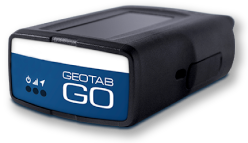
The Geotab GO device records data such as vehicle location, speed, idling, distance, and more. MyGeotab gives businesses a central place to review that information. As the company grows, the system can support more vehicles, more users, more reports, and more integrations.
Geotab also offers access to the Geotab Marketplace, which includes solutions for video telematics, asset tracking, routing, maintenance, fuel management, and more. This means a small fleet can start with core GPS tracking and expand later if it needs dash cameras, asset trackers, temperature monitoring, advanced reporting, or other tools.
A small business does not need to adopt every feature on day one. The important step is building a foundation of reliable fleet data.
What Small Fleets Should Look For in a GPS Tracking Solution
Small fleets should look for a GPS tracking solution that is practical, scalable, and easy to use. The system should help answer everyday business questions: Where are my vehicles? Which driver is closest? How long was the vehicle stopped? Are drivers idling too much? Is a vehicle being used after hours? Which vehicles are due for maintenance? Can we prove that service was completed?
A strong solution should include real-time location visibility, trip history, driver behaviour insights, idling reports, maintenance alerts, geofencing, customizable notifications, and clear reporting. It should also come with support from a provider that understands how small businesses actually operate.
Technology should not create extra work. It should reduce confusion, automate reporting, and help managers make better decisions with less effort.
Small Fleet, Bigger Control
GPS tracking is not about fleet size. It is about business control. Small fleets face real problems: wasted fuel, missed appointments, unplanned repairs, vehicle misuse, theft risk, poor routing, and customer disputes. Because small businesses often have fewer vehicles, fewer spare resources, and tighter margins, these problems can be even more damaging than they are for large companies.
A small fleet does not need to become a large fleet before it starts using better tools. GPS tracking gives small businesses the visibility they need to manage vehicles, protect assets, support drivers, improve customer service, and reduce avoidable costs.
GPS Tracking Canada Can Help
GPS Tracking Canada provides GPS tracking solutions that integrate Geotab devices and services to help small fleets gain better visibility, improve driver accountability, reduce wasted time, and manage vehicles more efficiently. Whether your business operates a few service vans, delivery vehicles, trucks, or mobile assets, our team can help you choose a practical solution that fits your operation today and can grow with you tomorrow. To learn more about GPS tracking for your small fleet, contact us today.
Frequently Asked Questions
Is GPS tracking only useful for large fleets?
No. GPS tracking is useful for small fleets because it helps businesses see vehicle locations, reduce wasted time, manage fuel use, improve dispatching, and protect vehicles or assets.
How many vehicles do I need before GPS tracking makes sense?
GPS tracking can make sense even if your business only has a few vehicles. If those vehicles are important to your daily work, tracking can help improve visibility, accountability, and efficiency.
Why should a small business use GPS tracking?
A small business should use GPS tracking to better manage vehicles, reduce delays, improve customer service, monitor driver behaviour, control fuel costs, and respond faster when problems happen.
What problems can GPS tracking help small fleets solve?
GPS tracking can help small fleets solve problems such as late arrivals, inefficient routes, excessive idling, unauthorized vehicle use, missed maintenance, customer disputes, and lack of visibility.
Can GPS tracking help reduce fuel costs?
Yes. GPS tracking can help reduce fuel costs by showing idling, inefficient routes, speeding, unnecessary trips, and driver habits that may increase fuel use.
How does GPS tracking help with dispatching?
GPS tracking helps dispatchers see where vehicles are in real time, identify which driver is closest to a job, respond to delays, and make faster scheduling decisions.
Can GPS tracking help improve customer service?
Yes. GPS tracking can help businesses provide more accurate arrival updates, confirm job completion, respond to customer questions, and reduce uncertainty when service delays happen.
How does GPS tracking help prove service was completed?
GPS tracking can show vehicle location, arrival time, departure time, route history, stop duration, and geofence activity. This creates a digital record that can help confirm when and where service took place.
Can GPS tracking help small fleets reduce downtime?
Yes. GPS tracking and telematics can help small fleets monitor mileage, engine data, diagnostic alerts, and maintenance schedules so vehicle issues can be addressed earlier.
Why is downtime a bigger issue for small fleets?
Downtime is a bigger issue for small fleets because each vehicle usually plays an important role. If one vehicle is unavailable, it can affect jobs, deliveries, customer appointments, and revenue.
Can GPS tracking prevent unauthorized vehicle use?
Yes. GPS tracking can help identify after-hours use, unexpected trips, vehicles leaving approved areas, and other activity that may not follow company policy.
How do geofences help small businesses?
Geofences create virtual boundaries around locations such as yards, job sites, warehouses, or customer locations. Businesses can receive alerts when vehicles enter or leave those areas.
Can GPS tracking help with vehicle theft recovery?
Yes. GPS tracking can help by showing a vehicle’s current or last known location, movement history, and unauthorized movement alerts, which may support a faster response.
Does GPS tracking monitor driver behaviour?
Yes. GPS tracking can help monitor driving behaviour such as speeding, harsh braking, harsh acceleration, idling, seat belt use, and other safety-related events depending on the system and vehicle data available.
Is GPS tracking the same as micromanaging drivers?
No. GPS tracking should be used to support safety, accountability, efficiency, and better communication. It gives managers data to coach drivers and make fairer decisions.
Can GPS tracking help protect good drivers?
Yes. GPS tracking can help protect good drivers by providing records of location, route history, arrival times, and driving activity when questions or disputes come up.
Is GPS tracking hard to use for small businesses?
A good GPS tracking system should be easy to use and provide clear information through maps, alerts, reports, and dashboards. Small businesses can start with core features and expand over time.
Can GPS tracking grow with my business?
Yes. GPS tracking can scale as your business adds more vehicles, drivers, users, reports, alerts, and integrations.
What types of small businesses can benefit from GPS tracking?
GPS tracking can benefit contractors, delivery companies, HVAC businesses, plumbing companies, electrical contractors, landscaping companies, snow removal fleets, service fleets, and other businesses with vehicles or mobile assets.
What if I have more questions about GPS tracking for my small fleet?
If you have more questions about GPS tracking for your small fleet, contact us. GPS Tracking Canada can help you understand your options and choose a solution that fits your business.