

Fleet Visibility vs. Fleet Control: What GPS Tracking Actually Gives You
When businesses first look into GPS tracking, they often use words like “visibility” and “control” as if they mean the same thing. They do not. Fleet visibility means knowing where vehicles, drivers, and assets are, what they are doing, and how they are performing. Fleet control means using that information to make better decisions, set clearer expectations, reduce waste, and improve accountability.
GPS tracking does not magically control a fleet on its own. It does not replace dispatchers, managers, maintenance teams, or driver communication. What it does give you is the information needed to manage your fleet with less guesswork. With the right telematics system, managers can move from “I think the truck is nearby” to “I can see where it is, how long it has been stopped, and whether it is following the planned route.”
Visibility Starts With Knowing Where Everything Is
The most basic value of GPS tracking is location visibility. A system like Geotab uses a vehicle tracking device and fleet management software to show vehicle location, trip history, speed, distance, engine data, and other activity. Geotab describes GPS fleet tracking as more than “dots on a map,” because it can also support safety, compliance, vehicle health, emissions, and operational reporting.
This matters because many fleet problems begin with a lack of information. A dispatcher may not know which technician is closest to an emergency job. A manager may not know whether a vehicle left the yard on time. A customer may ask when a driver arrived, but the business may only have a handwritten note or phone call to rely on. With GPS tracking, these questions can be answered using recorded location and activity data.
That visibility can be especially useful for service fleets, construction companies, delivery operations, municipal fleets, and any business with vehicles moving between job sites, customer locations, yards, and suppliers. Instead of calling drivers repeatedly for updates, managers can use a central platform to see what is happening across the fleet.
Visibility Becomes Control When It Creates Action
Seeing your fleet is only the first step. The real value comes when visibility turns into action. Fleet control does not mean controlling the vehicle like a remote-control car. It means setting rules, alerts, workflows, and reports that help managers respond faster and make better decisions.
For example, geofencing creates virtual boundaries around important locations such as company yards, customer sites, restricted zones, delivery areas, or job sites. When a vehicle enters or exits one of those areas, the system can trigger an alert or create a record. This helps businesses confirm site visits, detect unauthorized movement, reduce manual check-ins, and respond quickly when something does not look right.
The same idea applies to route activity. Route optimization uses GPS tracking and telematics data to help fleets plan more efficient routes based on factors such as location, traffic patterns, road conditions, weather, driver availability, fuel use, and vehicle performance. The GPS system does not force drivers to take the best route, but it gives managers the information needed to plan better routes, compare planned versus actual activity, and coach teams when routes are not being followed.
GPS Tracking Helps Reduce Wasted Time
One of the biggest benefits of fleet visibility is finding time that is being lost throughout the day. A few minutes of delay may not seem important, but across multiple vehicles, repeated delays can add up quickly. GPS tracking can help identify late departures, long stops, excessive idle time, unnecessary return trips, inefficient routing, and vehicles sitting unused.
Idling is a good example. Natural Resources Canada notes that burning gasoline produces carbon dioxide, which means unnecessary idling can increase fuel use and emissions. For fleets, idling also creates avoidable operating cost. GPS and telematics data can show when idling is happening, where it is happening, and which vehicles or routes may need attention.
That does not mean every idle event is a problem. Some vehicles need to idle for power take-off equipment, heating, cooling, safety, or operational reasons. The benefit of tracking is that it gives managers context. Instead of guessing, they can separate necessary idling from avoidable idling and build better policies around real fleet behaviour.
Driver Accountability Without Guesswork
Fleet visibility can also support driver accountability. A good GPS tracking program should not be about catching drivers doing something wrong. It should be about creating a fair, consistent record of vehicle activity and driver behaviour.
Geotab’s fleet management tools can support driver behaviour management, GPS vehicle tracking, engine data reporting, route optimization, and vehicle health monitoring. This gives managers a clearer view of speeding events, harsh braking, aggressive acceleration, seat belt use, stop activity, route history, and other trends that can affect safety and efficiency.
This is where visibility becomes useful for coaching. Instead of relying on complaints, assumptions, or one-time incidents, managers can look at patterns. A driver with repeated harsh braking events may need route support, additional training, or a conversation about safe following distance. A driver with strong safety performance can be recognized and used as an example for the team. The data creates a more balanced way to manage performance.
Better Proof of Service for Customers
For many businesses, GPS tracking also provides proof of service. This can be valuable when customers ask whether a vehicle arrived, how long it stayed, or whether a job was completed. GPS data can help confirm arrival times, departure times, stop duration, route history, and vehicle activity near the customer location.
This is useful for industries such as HVAC, plumbing, landscaping, delivery, waste management, snow removal, security patrols, and field service. When a customer dispute happens, managers do not have to rely only on memory or manual paperwork. They can review trip history and location data to understand what happened.
Proof of service can also improve billing accuracy. If a job is billed based on time on site, number of visits, service windows, or route completion, GPS tracking gives businesses a stronger operational record. It helps protect both the company and the driver by showing what actually happened in the field.
Maintenance Visibility Helps Prevent Bigger Problems
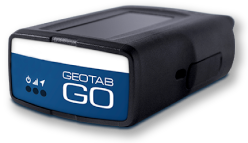
Fleet visibility is not only about location. Modern telematics can also help managers understand vehicle health. The Geotab GO device plugs into the vehicle’s OBD II port on supported vehicles and can collect rich vehicle data. Geotab’s fleet software can report on engine RPM, engine light, seatbelt, odometer, engine hours, emissions, VIN, battery voltage, and other vehicle information.
This data can help businesses move from reactive maintenance to more proactive maintenance planning. Instead of waiting for a driver to report a problem or for a vehicle to break down, managers can monitor engine data, mileage, engine hours, and diagnostic alerts. That can help schedule service earlier, reduce unexpected downtime, and keep vehicles available for work.
Again, GPS tracking does not “control” the maintenance process by itself. It gives maintenance teams the visibility needed to act sooner and make more informed decisions.
Compliance and Records Can Become Easier to Manage
For regulated fleets, telematics can also support compliance workflows. Transport Canada maintains a list of certified electronic logging devices for use in Canada, and Geotab offers ELD solutions certified for Canada and the United States. These systems can help fleets manage hours of service, driver logs, vehicle inspections, and related records.
This is another example of the difference between visibility and control. The system does not make compliance automatic in every situation. Drivers still need training. Managers still need to review records. Policies still need to be followed. But the right platform can reduce paperwork, improve record access, and make it easier to identify issues before they become bigger problems.
Control Requires Clear Policies
A GPS tracking system should be implemented with clear expectations. The Office of the Privacy Commissioner of Canada explains that workplace privacy rights must be considered when employers monitor employees, including when tracking the location of company vehicles. The OPC has also stated that GPS use may be acceptable in certain situations when the purposes are defined and communicated to employees beforehand.
That matters because fleet tracking works best when it is transparent. Drivers should understand why tracking is being used, what data is collected, how the data will be used, and how it supports safety, customer service, compliance, maintenance, and efficiency. Clear policies help prevent GPS tracking from feeling like surveillance and instead position it as a business tool.
This is also important for managers. Too much data without a plan can create noise. Alerts should be meaningful. Reports should connect to business goals. Coaching should be fair and consistent. Fleet control comes from using the data responsibly, not from watching every movement without context.
What GPS Tracking Actually Gives You
GPS tracking gives fleets visibility into location, movement, stops, routes, idling, driver behaviour, vehicle health, and job-site activity. It gives managers a more accurate record of what happened during the workday. It helps dispatchers make faster decisions, helps maintenance teams plan service, helps owners reduce waste, and helps customer service teams answer questions with confidence.
What it does not give you is instant control without management effort. GPS tracking is a tool, not a replacement for leadership. The businesses that get the most value from fleet tracking are the ones that connect the technology to clear goals: reducing fuel waste, improving route efficiency, protecting vehicles, supporting drivers, strengthening proof of service, and making better decisions.
Fleet visibility shows you what is happening. Fleet control begins when you use that visibility to improve how the business runs.
Get More From Your Fleet With GPS Tracking Canada
GPS Tracking Canada helps businesses turn fleet visibility into practical fleet control by providing GPS tracking solutions that integrate Geotab devices and services. Whether you need vehicle tracking, driver safety insights, maintenance visibility, route optimization, asset tracking, or better proof of service, our team can help you choose and implement a solution that fits your operation. To learn how GPS tracking can support your fleet, contact us today.
Frequently Asked Questions
What is fleet visibility?
Fleet visibility means being able to see where your vehicles, drivers, and assets are, along with important activity such as routes, stops, idling, trip history, and vehicle performance.
What is fleet control?
Fleet control means using fleet data to make better decisions, improve dispatching, reduce waste, support drivers, plan maintenance, and manage daily operations more effectively.
Is fleet visibility the same as fleet control?
No. Fleet visibility shows what is happening across your fleet. Fleet control happens when managers use that information to take action, improve processes, and make smarter operational decisions.
What does GPS tracking actually give a fleet?
GPS tracking gives fleets real-time location data, trip history, stop activity, route information, driver behaviour insights, vehicle health data, alerts, reports, and records that can support better decision-making.
Does GPS tracking let a company control a vehicle remotely?
No. GPS tracking does not control a vehicle remotely. It provides information that helps managers understand vehicle activity and respond more effectively.
How does GPS tracking improve dispatching?
GPS tracking helps dispatchers see where vehicles are in real time, identify the closest available driver, respond to delays, adjust routes, and reduce unnecessary phone calls.
How can GPS tracking reduce wasted time?
GPS tracking can show late starts, long stops, excessive idling, inefficient routes, unnecessary return trips, and delays that may not be obvious without vehicle activity data.
What is geofencing in GPS tracking?
Geofencing means creating virtual boundaries around important locations such as yards, job sites, customer locations, or restricted areas. The system can record or alert managers when a vehicle enters or exits those areas.
How does GPS tracking help with proof of service?
GPS tracking helps provide proof of service by recording when a vehicle arrived at a location, how long it stayed, when it left, and what route it took.
What businesses benefit from proof of service?
Proof of service is useful for field service companies, delivery fleets, construction companies, landscaping crews, snow removal contractors, waste management fleets, security patrols, and other mobile service businesses.
Can GPS tracking help reduce fuel costs?
Yes. GPS tracking can help reduce fuel costs by identifying excessive idling, inefficient routes, unnecessary driving, poor driving habits, and vehicle issues that may affect fuel use.
How does GPS tracking support driver accountability?
GPS tracking creates a consistent record of driver activity, including routes, stops, speeding events, harsh braking, and other driving behaviours. This helps managers coach drivers based on data instead of assumptions.
Is GPS tracking only used to monitor drivers?
No. GPS tracking can also support dispatching, customer service, maintenance, route planning, asset tracking, compliance, fuel management, safety programs, and business reporting.
How can GPS tracking improve customer service?
GPS tracking helps businesses provide more accurate arrival updates, respond faster to customer questions, verify service visits, and resolve disputes using trip history and location records.
Can GPS tracking help with maintenance?
Yes. Many GPS and telematics systems can monitor vehicle data such as odometer, engine hours, diagnostic alerts, battery voltage, and engine activity. This helps fleets plan maintenance and reduce unexpected downtime.
Does GPS tracking help with compliance?
Yes. GPS tracking and telematics can help fleets manage records, driver logs, inspections, hours of service, and other compliance-related information depending on the solution used.
Can GPS tracking help prevent vehicle or asset theft?
Yes. GPS tracking can help by showing vehicle or asset location, movement history, unauthorized movement, and geofence alerts. This can help managers respond faster when something moves unexpectedly.
How should businesses introduce GPS tracking to drivers?
Businesses should explain why GPS tracking is being used, what data is collected, how the data will be used, and how it supports safety, efficiency, customer service, and fair accountability.
What is the difference between tracking and surveillance?
Tracking is most effective when it is used as a business tool to manage vehicles, routes, safety, maintenance, and service records. Surveillance suggests constant monitoring without clear purpose. Clear policies help make GPS tracking fair and transparent.
How can GPS Tracking Canada help with fleet visibility and control?
GPS Tracking Canada provides GPS tracking solutions that integrate Geotab devices and services. Our team can help businesses monitor vehicles, improve driver safety, optimize routes, manage assets, support maintenance, and turn fleet visibility into practical operational control.