

The Hidden Cost of Missing Equipment: Why Job Site Asset Tracking Matters
On a busy construction site, equipment can move quickly. A skid steer may be sent to another project, a generator may be left behind after a weekend shift, a trailer may be parked at a temporary yard, and smaller tools may be shared between crews without anyone updating a spreadsheet. At first, missing equipment may seem like a simple inconvenience. But for contractors, builders, municipalities, utilities, and field service teams, the real cost often goes far beyond the replacement price.
Missing equipment affects productivity, scheduling, customer commitments, insurance risk, worker accountability, and job profitability. That is why asset tracking is no longer just a tool for large fleets. It matters on every job site where vehicles, trailers, machines, tools, and mobile assets are constantly moving.
Missing Equipment Is More Than a Replacement Cost
When a piece of equipment disappears, the most obvious cost is the value of the asset itself. But that is only the beginning. Construction equipment theft has long been a major problem across North America. The National Equipment Register has estimated that the value of stolen construction equipment can range from hundreds of millions to $1 billion annually, and ConstructConnect notes that replacement cost is only one part of the problem.
The hidden costs often include rental equipment, emergency purchases, delayed crews, missed deadlines, administrative time, police reports, insurance claims, and higher premiums. If a machine is needed for a critical phase of work, one missing asset can delay several teams at once. A crew waiting for a compact loader, compressor, generator, or trailer is still on the clock, even if production has stopped.
For Canadian businesses, the risk is not theoretical. Équité Association’s cargo and heavy equipment theft research found that over $239 million in stolen cargo and equipment remained unrecovered, with heavy equipment theft rising due to machinery shortages. Another report summarizing Équité’s data noted that more than $124.6 million in losses were related to heavy equipment theft between 2019 and 2023, with Edmonton, Calgary, and Toronto identified among the main areas affected.
Why Job Sites Are Easy Targets
Job sites are active, open, and constantly changing. Multiple subcontractors may come and go. Equipment may be parked outdoors. Temporary storage areas may not have the same security as a permanent yard. In many cases, machines are moved after hours, left at remote sites, or stored in locations where supervision is limited.
That creates opportunity for both theft and misplacement. A missing asset is not always stolen. Sometimes it was moved to another job, parked behind a building, borrowed by another crew, left at a supplier, or forgotten at a customer site. But from an operations standpoint, the result is the same: no one knows where the asset is when it is needed.
Northbridge Insurance explains that heavy equipment and tools can be easy to steal, easy to sell, and difficult to recover. The same article recommends detailed recordkeeping, including serial numbers, make and model, purchase details, markings, service dates, and photos. Asset tracking builds on that foundation by adding live or near real-time location visibility, movement history, and alerts.
Downtime Can Cost More Than the Asset Itself
A missing generator may cost a few thousand dollars to replace, but the downtime it creates can be much more expensive. If a crew cannot power tools, run lighting, complete concrete work, load materials, or operate a machine, the job slows down. The cost multiplies when several employees, subcontractors, or rented assets are waiting.
This is where asset tracking becomes a productivity tool, not just a theft-prevention tool. Knowing where equipment is located helps managers assign the closest available asset, avoid unnecessary rentals, and reduce the time spent calling drivers or supervisors to ask, “Where is it?”
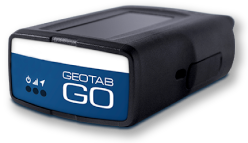
For construction fleets, Geotab explains that GPS tracking can provide near real-time insight into equipment location, state of operation, and engine diagnostics. That visibility helps teams make faster decisions when equipment is spread across several job sites, yards, and customer locations.
Underused Equipment Is Also a Hidden Cost
Missing equipment is not always missing because it was stolen. Sometimes it is “missing” from the balance sheet because it is sitting idle. Many businesses own more equipment than they realize, but still rent extra machines because they do not have a clear view of what is available.
Without asset utilization data, managers may not know which trailers are being used, which machines are sitting for days, or which assets are assigned to the wrong site. Over time, this can lead to unnecessary purchases, excessive rentals, poor maintenance planning, and inefficient capital spending.
Asset tracking helps answer practical questions such as:
- Which equipment is currently on site?
- Which assets have not moved recently?
- Which machines are being used regularly?
- Which trailers or tools are sitting idle?
- Which asset is closest to the next job?
- Did equipment leave the yard after hours?
- Was a machine actually delivered to the correct location?
These answers help businesses improve planning and reduce waste. Geotab’s asset tracking solutions are designed to help companies monitor vehicles, trailers, containers, and heavy equipment on one integrated platform, making it easier to manage mixed fleets and mobile assets from one place.
Asset Tracking Helps Protect Equipment After Hours
Many thefts happen when no one is watching: overnight, on weekends, during holidays, or between project phases. Even with fences, locks, cameras, and lighting, a job site can still be vulnerable if nobody knows an asset has moved until the next morning.
With GPS asset tracking, managers can receive alerts when equipment moves unexpectedly, leaves a geofenced area, or appears at an unauthorized location. This can help teams respond faster and provide better information if law enforcement or insurance providers become involved.
For high-value machines and rugged environments, Geotab’s GO9 RUGGED support documentation describes a ruggedized telematics device designed for heavy equipment, yellow iron, agricultural machinery, and oil field equipment. For portable or non-powered assets, Geotab’s GO Anywhere asset tracker is built to help companies track valuable equipment, materials, and other assets with flexible reporting settings inside MyGeotab.
Small Tools Deserve Visibility Too
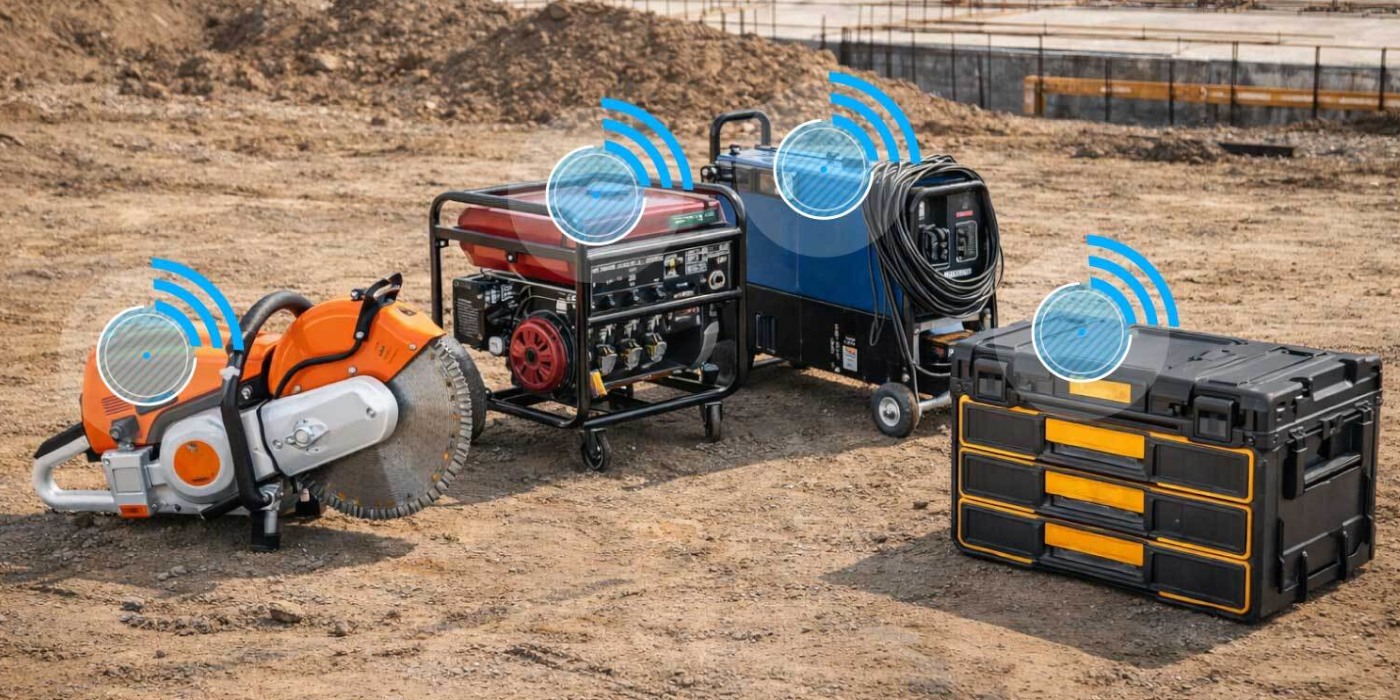
Heavy equipment gets most of the attention, but smaller assets can create just as much frustration. Tools, pumps, ladders, compressors, compact equipment, attachments, and job boxes often move between crews. These items may not justify the same tracking hardware as a large machine, but they still affect productivity when they are missing.
Geotab’s IOX-BT documentation explains that Bluetooth proximity beacons can be attached to tools and equipment to increase asset utilization, reduce the impact of misplaced equipment, boost productivity, reduce operational costs, and improve on-time delivery. For companies already using Geotab-connected vehicles, this can help extend visibility beyond trucks and heavy machines to smaller movable assets.
This is especially useful for businesses with service trucks, mobile crews, construction teams, utility workers, municipal operations, and contractors who need to keep track of equipment that moves every day.
Better Records Support Recovery and Accountability
If equipment is stolen, accurate records can make the recovery process easier. Serial numbers, photos, ownership documents, purchase information, and tracking history can help support police reports, insurance claims, and internal investigations.
Asset tracking also improves accountability before a theft ever happens. Managers can see where equipment was last located, when it moved, and which job site it was associated with. This reduces guesswork and helps teams separate theft from misplacement, unauthorized use, or poor handoff procedures.
That matters because many equipment problems start with unclear responsibility. If nobody knows who had the asset last, where it was parked, or when it left the yard, the business loses valuable time. Tracking data creates a clearer chain of custody.
Asset Tracking Makes Job Sites Easier to Manage
Every job site has moving parts. Vehicles arrive and leave. Crews change. Equipment gets reassigned. Materials are delivered. Trailers are dropped off. Managers may be responsible for several sites at once. Without a centralized tracking system, equipment management can depend too heavily on phone calls, memory, whiteboards, and spreadsheets.
Asset tracking gives managers a more reliable view of field operations. It can help reduce unnecessary site visits, confirm equipment delivery, improve dispatching, support maintenance planning, and reduce last-minute scrambling. For businesses already using GPS fleet tracking, adding asset tracking can create a more complete picture of what is happening in the field.
The result is not just better security. It is better control.
Why Asset Tracking Matters on Every Job Site
The hidden cost of missing equipment is the disruption it creates. A stolen machine, misplaced trailer, missing generator, or lost tool can delay work, frustrate employees, increase costs, and hurt customer commitments. The more job sites, crews, and assets a company manages, the harder it becomes to rely on manual tracking alone.
Asset tracking helps businesses move from reactive searching to proactive visibility. Instead of finding out equipment is missing after a crew arrives, managers can see where assets are, receive alerts when they move, and use location history to make better decisions.
For construction, utilities, landscaping, snow removal, municipal work, field service, and other job-site-based operations, that visibility can protect equipment, reduce downtime, improve utilization, and support stronger day-to-day operations.
Protect Your Job Sites With GPS Tracking Canada
GPS Tracking Canada helps businesses protect vehicles, trailers, heavy equipment, and mobile assets with GPS tracking solutions that integrate Geotab devices and services. Whether you need visibility for powered equipment, rugged off-road machines, trailers, tools, or job-site assets, our team can help you choose a practical tracking setup for your operations. If missing equipment, theft risk, downtime, or poor asset visibility is costing your business time and money, contact us today to learn how GPS Tracking Canada can help you monitor and manage your assets more effectively.
Frequently Asked Questions
What is asset tracking for job sites?
Asset tracking for job sites means using GPS, telematics, or tracking devices to monitor the location and movement of equipment, trailers, tools, and other mobile assets used in field operations.
Why does asset tracking matter on construction sites?
Asset tracking matters because construction sites often have equipment moving between crews, yards, suppliers, and multiple projects. Tracking helps reduce lost equipment, theft risk, downtime, and unnecessary rentals.
What types of equipment can be tracked?
Businesses can track vehicles, trailers, skid steers, generators, compressors, compact equipment, heavy machinery, attachments, tools, containers, and other valuable job-site assets.
How does GPS asset tracking help prevent equipment theft?
GPS asset tracking helps prevent theft by showing asset location, movement history, and unauthorized movement alerts. If equipment leaves a job site or yard unexpectedly, managers can respond faster.
Can asset tracking help recover stolen equipment?
Yes. Asset tracking can provide current location, last known location, travel history, and movement alerts, which may help businesses and law enforcement respond more quickly after a theft.
What are the hidden costs of missing equipment?
The hidden costs of missing equipment can include downtime, rental replacements, delayed crews, missed deadlines, administrative work, insurance claims, lost productivity, and customer service issues.
Is missing equipment always stolen?
No. Equipment may be misplaced, borrowed by another crew, moved to another site, left at a supplier, or parked in an unexpected location. Asset tracking helps managers find assets faster and reduce confusion.
How does asset tracking reduce downtime?
Asset tracking reduces downtime by helping managers quickly locate the equipment needed for a job. This helps crews avoid waiting for tools, trailers, generators, or machines that cannot be found.
Can asset tracking help reduce equipment rental costs?
Yes. When managers know where equipment is and whether it is being used, they can avoid renting extra machines unnecessarily and make better use of existing assets.
How does asset tracking improve equipment utilization?
Asset tracking helps businesses see which assets are active, idle, underused, or sitting at the wrong location. This information can support better planning and smarter purchasing decisions.
What is a geofence in asset tracking?
A geofence is a virtual boundary around a real location, such as a job site, yard, warehouse, or customer property. Alerts can be triggered when an asset enters or leaves that area.
How do geofence alerts help protect job-site equipment?
Geofence alerts notify managers when equipment leaves an approved location, especially after hours or without authorization. This can help reduce theft, misuse, and unexpected asset movement.
Can asset tracking be used for trailers?
Yes. Asset tracking is commonly used for trailers because trailers are often dropped at job sites, moved between locations, or left unattended for long periods.
Can small tools be tracked too?
Yes. Smaller tools and equipment can often be tracked using compatible tags, beacons, or asset tracking solutions. This can help reduce time spent searching for tools and improve job-site organization.
Does asset tracking work for powered and non-powered assets?
Yes. Different tracking solutions are available for powered assets, such as heavy equipment, and non-powered assets, such as trailers, containers, and portable job-site equipment.
How does asset tracking improve accountability?
Asset tracking creates a clearer record of where equipment was located, when it moved, and which job site it was associated with. This helps reduce confusion between crews and improves responsibility for shared assets.
Can asset tracking help with maintenance planning?
Yes. For powered assets and equipment connected to telematics, tracking can help monitor usage, engine hours, mileage, and location, making it easier to plan maintenance and reduce unexpected breakdowns.
Is asset tracking useful for businesses with multiple job sites?
Yes. Asset tracking is especially useful for businesses that manage multiple job sites because it gives managers a central view of equipment location and availability across different locations.
What industries benefit from job-site asset tracking?
Construction, landscaping, snow removal, utilities, municipal services, field service, equipment rental, waste management, and infrastructure companies can all benefit from asset tracking.
What if I have more questions about asset tracking?
If you have more questions about asset tracking, equipment visibility, job-site security, theft prevention, or Geotab-integrated solutions, contact us. GPS Tracking Canada can help you find the right solution for your vehicles, trailers, equipment, and mobile assets.