


Proof of Service with GPS Tracking: How Fleets Verify Every Job
Every fleet has some version of the same problem: a customer, job site supervisor, municipality, or internal manager asks, “Was the truck there?” “When did it arrive?” “How long was it on site?” or “Was the route actually completed?” For years, companies answered these questions with paper tickets, handwritten timesheets, phone calls, driver memory, or photos taken after the fact. Those records can help, but they are often incomplete when a customer disputes an invoice, says a driver never arrived, or questions why a service window was missed.
GPS tracking gives fleet operators a stronger answer. Modern telematics uses GPS location data, vehicle activity, trip history, geofences, route records, and reporting to create a digital trail of what happened in the field. The U.S. government describes GPS as a utility that provides positioning, navigation, and timing services, while Geotab explains that GPS helps synchronize location, velocity, and time data. In fleet operations, that time-and-location data becomes the foundation for proof of service.
What Does Proof of Service Mean?
Proof of service means having reliable evidence that a vehicle, driver, or asset was at the right place, at the right time, for the right job. For service fleets, this can confirm that a technician arrived at a customer property. For delivery fleets, it can support proof that a vehicle reached a delivery location. For construction, landscaping, and snow removal fleets, it can show how long crews were on a job site. For public works, it can verify that a street was plowed, swept, salted, or serviced.
The purpose is not only to settle disputes. Proof of service helps companies bill accurately, protect drivers from unfair complaints, improve customer communication, train dispatchers, and understand whether routes and schedules are realistic. It turns field activity from a series of disconnected calls and forms into a searchable operational record.
How GPS Tracking Creates Proof of Service
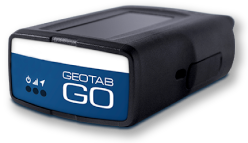
A GPS tracking system starts by recording vehicle location and movement. Geotab states that its GO device can show vehicle locations in near real time with complete trip history, while also recording data such as location, speed, idling, distance, and more. That means a manager can look back at a specific date and see when a vehicle left the yard, which route it took, where it stopped, and when it returned.
Trip history is especially useful when there is a customer question. A breadcrumb trail can show whether a vehicle reached the address, how long it stayed nearby, and whether the driver made additional stops before or after. Geotab’s fleet reporting tools describe trip history as a breadcrumb trail for productivity assessment, and MyGeotab reporting can include detailed trip records such as start and stop times, driving and stop durations, locations, distances, engine hours, speeds, and idling time.
Those details create a more objective record than a handwritten note or verbal explanation.
Geofences Make Service Verification More Automatic
One of the most practical ways to create proof of service is through geofencing. A geofence is a virtual boundary around a real-world location such as a customer site, warehouse, landfill, depot, construction zone, or municipal service area. Geotab explains that geofencing can automate location tracking and reporting when vehicles enter or exit a customized area such as a customer site or job zone.
For a service fleet, that means a customer address can become a zone. When the vehicle enters the zone, the system records the arrival. When it exits, the system records the departure. Instead of asking a driver to manually text dispatch or fill out a form, the system can create a time-stamped record automatically.
This can help answer questions such as whether the crew arrived within the promised service window, how long the vehicle was on site, whether a job was skipped or completed late, which vehicle responded to the customer, whether the driver visited the wrong address, or whether multiple vehicles were sent to the same location unnecessarily.
For recurring work, geofences can also help identify patterns. If a location consistently takes longer than planned, the issue may not be the driver. It may be access, parking, site layout, loading delays, or unrealistic scheduling.
Proof of Service for Public Works, Snow Removal, and Specialized Equipment
Proof of service is especially valuable for municipalities and contractors that perform work the public cannot always see after the fact. Snow removal, street sweeping, salting, waste collection, and road maintenance can generate complaints even when the work was completed. Weather can cover plow marks. Parked cars can block areas. Residents may miss seeing the truck pass by.
Geotab highlights proof of service as a specific public works use case, noting that time-stamped evidence can support route completion, sweeper brush engagement, and plow blade activity. Geotab also explains that GPS-verified evidence can combine vehicle data with specialized equipment sensors such as plow blades, sweeper brooms, and material spreaders.
That distinction matters. A dot on a map may show that a truck drove down a street, but equipment data can help show what the truck was doing. For example, a snow contractor may need to know not only that the vehicle was in a parking lot, but whether the plow was down. A street sweeping department may need to know not only that the sweeper passed through a neighbourhood, but whether the brush was engaged. A waste fleet may want evidence that hydraulic or PTO-driven equipment was active at the stop.
When this data is available in reports, fleet managers can respond to complaints with facts instead of guesswork.
Customer Disputes and Billing Questions
Proof of service is also a revenue protection tool. When a customer says the technician was only on site for 10 minutes but the invoice shows a longer visit, the company needs a fair way to review the situation. GPS tracking can provide an arrival and departure record. If the vehicle was on site for the billed time, the company can stand behind its invoice. If the record shows a shorter visit, the company can correct the billing quickly and protect the relationship.
This helps both sides. Customers get transparency, and drivers are not judged based only on complaints. Managers can review the data and respond professionally: “Our record shows the service vehicle arrived at 9:12 a.m. and left at 10:03 a.m.” That is much stronger than, “The driver said they were there.”
For contract work, proof of service can also support performance reporting. A company can show that it serviced all assigned sites, met route expectations, responded to emergency calls, or spent a certain amount of time at a customer location. Over time, this helps create cleaner invoices, better renewal conversations, and stronger service-level documentation.
Dispatching, ETAs, and Missed Service Windows
Proof of service is not only about looking backward. It also helps dispatchers manage the day as it happens. Geotab’s Routing & Optimization Dispatch module uses near real-time incoming and outgoing updates so dispatch users can manage appointments and support resources in the field. For businesses that run multiple service calls per day, live visibility helps dispatchers identify late arrivals, reroute the closest vehicle, and inform customers before a problem becomes a complaint.
When a fleet has accurate historical records, managers can also improve future schedules. If a route regularly takes 35 minutes longer than planned, the schedule can be changed. If a specific customer site requires extra unload time, the quote can reflect that. If a driver is consistently assigned inefficient routes, dispatch can adjust. Proof of service becomes part of continuous improvement.
What Should Be Included in a Proof-of-Service Report?
A useful proof-of-service report should be easy to understand and should connect vehicle activity to the job being reviewed. Depending on the fleet, it may include the vehicle or asset name, driver name or driver ID, customer or site name, arrival and departure time, total time on site, GPS location, geofence entry and exit, trip history, route completion status, distance travelled, idling time, photos, forms, signatures, work order details, or equipment activity such as PTO, spreader, broom, lift, pump, or plow use.
Not every fleet needs every data point. A plumbing or HVAC company may mainly need arrival, departure, and time-on-site records. A municipal snow operation may need route completion, plow activity, and salt application data. A construction fleet may need job site arrivals, equipment utilization, and after-hours movement. The best proof-of-service setup matches the evidence to the type of work being performed.
Privacy and Trust: Use the Data the Right Way
Proof of service works best when employees understand why GPS tracking is being used. The goal should be to verify work, improve dispatching, support safety, protect customers, and defend drivers from inaccurate claims, not to create a “gotcha” culture.
In Canada, workplace tracking should be handled carefully. The Office of the Privacy Commissioner of Canada notes that individuals have a right to privacy at work, even when using employer equipment, while employers may need information for purposes such as staffing, payroll, performance management, and safety. PIPEDA’s privacy principles include accountability, identifying purposes, consent, limiting collection, limiting use, safeguards, openness, and individual access.
In practical terms, fleet operators should explain what is tracked, when tracking happens, who can access the data, how long records are kept, and how data will be used. Written GPS tracking policies, role-based access, retention settings, and clear driver communication help make proof of service more trustworthy.
Best Practices for Building Reliable Proof of Service
To get the most value from GPS tracking, businesses should avoid treating proof of service as a single report. It should be built into the daily workflow.
Start by creating accurate zones for customer sites, depots, yards, landfills, job sites, and regular service areas. Then decide which alerts and reports matter most. A landscaping company might track arrivals and departures at customer properties, while a towing company might focus on dispatch response times and route history. A public works fleet may need route completion and equipment engagement reports.
Next, connect the proof to the business process. Dispatchers should know where to check status. Customer service staff should know how to answer a service complaint. Managers should know how to export or review reports. Drivers should know how GPS records protect them when they did the work correctly.
Finally, review the data regularly. Proof of service can show missed visits, late arrivals, long dwell times, duplicate trips, unnecessary idling, and inefficient routing. These are not just recordkeeping issues. They are opportunities to improve scheduling, reduce costs, and deliver better service.
The Bottom Line
Proof of service with GPS tracking gives fleets a clearer way to answer one of the most important operational questions: “What actually happened in the field?” Instead of relying only on memory, paper records, or phone calls, companies can use GPS location, trip history, geofences, route reports, and equipment data to verify service activity.
For customers, that means more transparency. For drivers, it means better protection from unfair complaints. For managers, it means fewer disputes, stronger invoices, better dispatching, and a more accurate picture of fleet performance. For organizations that need to prove work was completed, GPS tracking turns everyday vehicle movement into useful business evidence.
At GPS Tracking Canada, we help businesses create practical proof-of-service workflows using GPS tracking solutions integrated with Geotab devices and services. Whether you need to verify technician visits, confirm route completion, monitor snow removal, track job site attendance, or improve customer communication, our team can help you choose the right Geotab setup, reports, zones, and add-ons for your operation. To see how GPS Tracking Canada can help your fleet turn location data into clear service documentation, contact us today.
Frequently Asked Questions
What is proof of service in GPS tracking?
Proof of service means using GPS tracking data to confirm that a vehicle, driver, or asset was at a specific location at a specific time and completed the required work.
How does GPS tracking prove that a service was completed?
GPS tracking can show vehicle location, arrival time, departure time, route history, stop duration, and geofence activity. This creates a digital record that helps verify when and where service took place.
Why is proof of service important for fleets?
Proof of service helps fleets reduce customer disputes, support accurate billing, confirm job completion, protect drivers from false complaints, and improve accountability.
What types of businesses need proof of service?
Proof of service is useful for delivery companies, HVAC fleets, plumbing companies, landscaping crews, snow removal contractors, waste management fleets, construction companies, public works departments, and mobile service businesses.
Can GPS tracking show when a driver arrived at a customer site?
Yes. GPS tracking can record when a vehicle enters a location, stops at a customer site, and leaves the area.
What is a geofence?
A geofence is a virtual boundary around a real-world location, such as a customer property, job site, depot, yard, or service area.
How do geofences help with proof of service?
Geofences can automatically record when a vehicle enters or exits a service location. This helps confirm arrival time, departure time, and total time spent on site.
Can GPS tracking help resolve customer disputes?
Yes. If a customer questions whether a service was completed, GPS tracking can provide location and time records to help verify what happened.
Can proof of service help with billing?
Yes. GPS tracking data can support accurate billing by showing how long a vehicle or crew was on site and whether the service visit occurred.
Does GPS tracking replace paper service records?
GPS tracking can reduce reliance on paper records, but many fleets use it alongside work orders, forms, photos, signatures, and customer notes for stronger documentation.
Can GPS tracking show how long a vehicle stayed at a job site?
Yes. GPS tracking can show stop duration, arrival time, departure time, and total time spent at a location.
Can proof of service protect drivers?
Yes. GPS records can help protect drivers when a customer claims they were late, skipped a site, or did not complete a visit.
Is proof of service useful for snow removal?
Yes. Snow removal fleets can use GPS tracking to show which lots, roads, or routes were serviced and when the vehicle was there.
Can GPS tracking show equipment activity?
In some setups, GPS tracking can be combined with vehicle or equipment data to show activity such as PTO use, plow engagement, sweeper brush activity, or other auxiliary equipment usage.
How does proof of service help dispatchers?
Proof of service helps dispatchers confirm job status, check vehicle locations, respond to customer questions, and reroute nearby drivers when needed.
Can GPS tracking improve customer communication?
Yes. Fleet managers can use GPS data to provide more accurate updates about arrival times, completed visits, delays, and route progress.
Is GPS proof of service only useful after a complaint?
No. It is also useful for daily operations, route planning, job costing, payroll review, contract reporting, and improving fleet efficiency.
Is employee privacy a concern with GPS tracking?
Yes. Fleets should clearly explain what data is collected, why it is collected, who can access it, and how it will be used.
How can companies introduce GPS proof of service to employees?
Companies should explain that GPS tracking is used to verify work, improve dispatching, support customers, protect drivers, and improve business operations.
How can GPS Tracking Canada help with proof of service?
GPS Tracking Canada helps fleets set up GPS tracking solutions integrated with Geotab devices and services, including reports, geofences, route history, and tools that support proof of service. Contact us to learn how we can help your fleet improve service verification.