

If you manage a fleet of vehicles, you have probably heard of GPS fleet tracking. But what does it actually do, and is it worth the investment? This guide breaks it down in plain language so you can decide whether it makes sense for your business.
What Is GPS Fleet Tracking?
GPS fleet tracking is a system that uses small devices installed in your vehicles to report their location, speed, and engine data back to you in real time. You log into a web platform or mobile app and see exactly where every vehicle is, where it has been, and how it is being driven.
The tracking device connects to GPS satellites to determine location and uses a cellular connection to send that data to the cloud. Most modern systems update every few seconds, so you are looking at live information, not yesterday’s data.
How Does It Work?
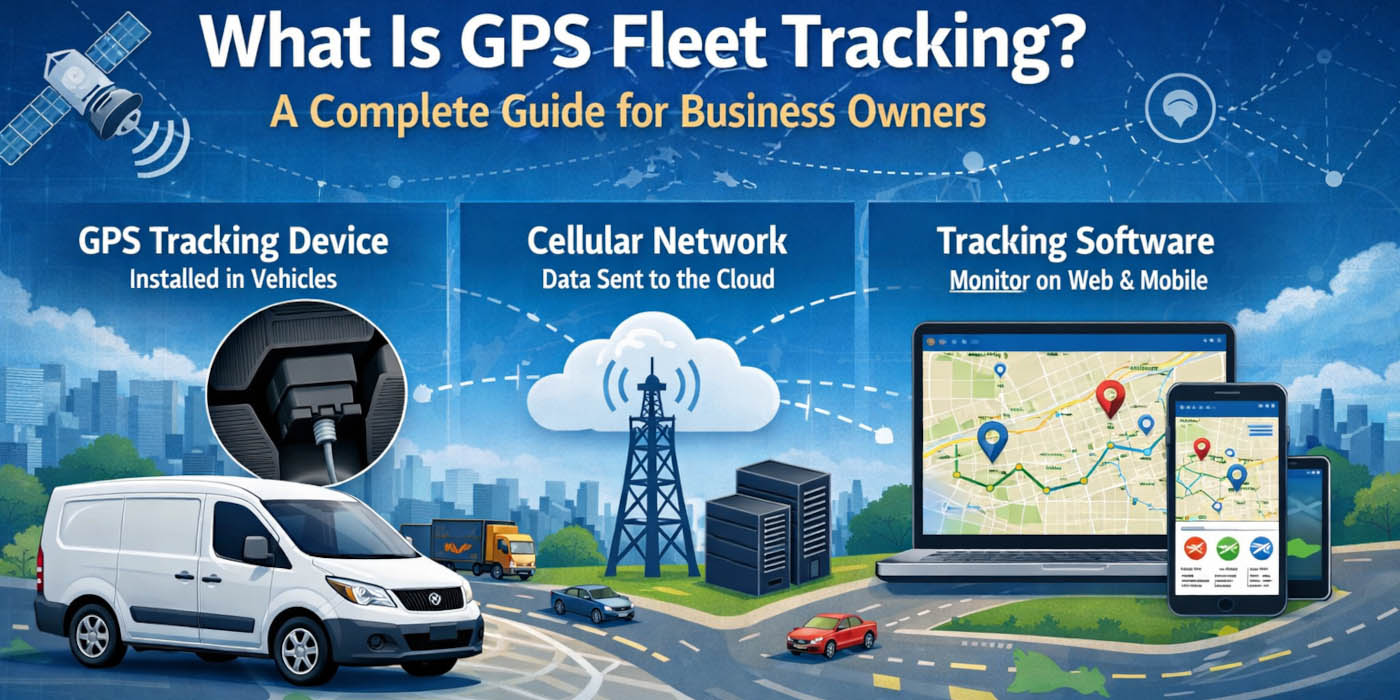
There are three main components to any GPS fleet tracking system.
The Tracking Device
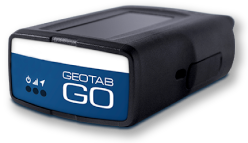
A small hardware unit gets installed in each vehicle. Some plug directly into the OBD-II port under the dashboard, which takes about 30 seconds. Others are hardwired into the vehicle for a more permanent setup. There are also battery-powered options for trailers, equipment, and assets that do not have their own power source.
The Cellular Network
The device transmits data over the cellular network to a secure cloud server. This happens automatically. There is nothing for you or your drivers to do. As long as the vehicle has cellular coverage, the data flows.
The Software Platform
You access your fleet data through a web-based platform or a mobile app. This is where you see live vehicle locations on a map, pull trip history reports, set up alerts for speeding or after-hours use, and track fuel consumption and engine diagnostics.
What Can You Actually Track?
Modern GPS fleet tracking goes well beyond just showing a dot on a map. Here is what a typical system gives you.
Real-time vehicle location is the foundation. You can see where every truck, van, or car is at any moment. Trip history lets you replay routes and see exactly where a vehicle went, how long it stopped, and what route it took.
Speed and driving behaviour monitoring flags aggressive driving, hard braking, and rapid acceleration. Engine diagnostics pull fault codes directly from the vehicle so you know about mechanical issues before they become breakdowns. Fuel usage tracking helps you identify waste from idling, inefficient routes, or unauthorized use.
Many systems also support geofencing, which sends you an alert when a vehicle enters or leaves a specific area. This is useful for job site monitoring, yard management, and making sure drivers stay within their assigned territory.
Who Uses GPS Fleet Tracking?
Fleet tracking is not just for large trucking companies. It is used across a wide range of industries in Canada.
Construction companies track heavy equipment and crew vehicles across multiple job sites. Delivery and courier services use it to optimize routes and give customers accurate ETAs. Landscaping and snow removal companies use it to verify completed jobs and manage seasonal crews. Service companies like plumbers, electricians, and HVAC technicians use it to dispatch the closest available technician.
Any business that puts employees behind the wheel of a company vehicle can benefit from knowing where those vehicles are and how they are being used.
What Does It Cost?
GPS fleet tracking typically involves two costs: the hardware and a monthly subscription. Devices range from a few hundred dollars for a basic plug-in unit to more for ruggedized or battery-powered options. Monthly subscriptions usually run between $15 and $40 per vehicle depending on the features you need.
Most businesses see a return on investment within the first few months through fuel savings, reduced overtime, and fewer unauthorized vehicle uses. The cost of not tracking is often higher than the cost of the system itself.
Final Thoughts
GPS fleet tracking gives you visibility into how your vehicles are being used every day. It helps you cut costs, improve safety, and make better decisions with real data instead of guesswork. If you are managing even a handful of vehicles, it is worth looking into.